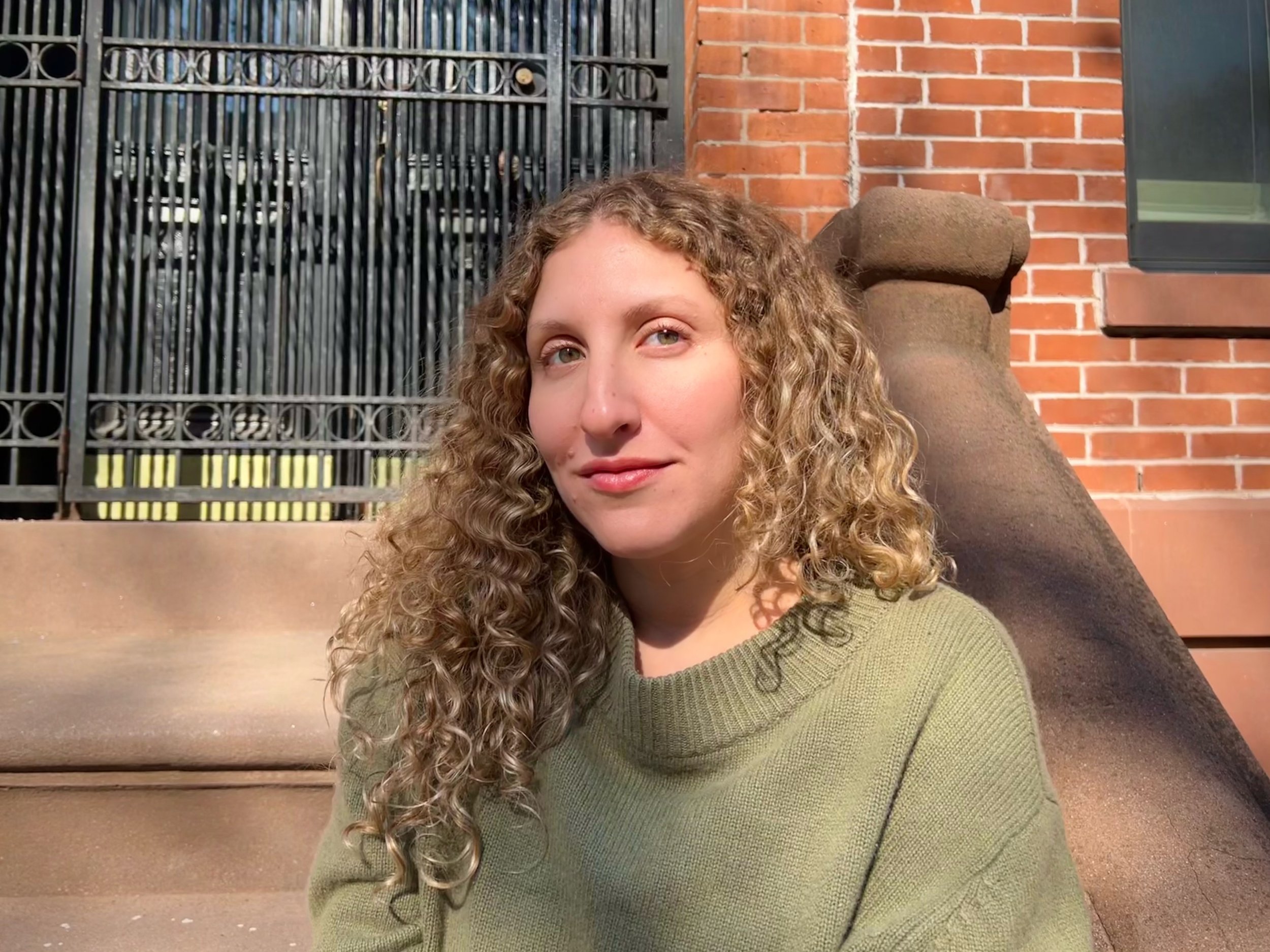
Stay dirrty, Tumblr.
(Source: cordjefferson)
I name-check some of my favorite Millennials (and remind the world that entrepreneurs aren’t the only ones changing the world) in this piece for TODAY.com.
(Source: minimumragers)
Finally got access to Joel Stein’s paywalled TIME cover story, “The Me-Me-Me Generation.” Glad he cleared up this misunderstanding about poor millennials so eloquently and non-racist-ly.

“Anna Jarvis spearheaded the first Mother’s Day events in 1908 to honor her own mother, a Sunday School teacher and caregiver for wounded soldiers during the Civil War. From that point on, she campaigned zealously for the holiday to become official and in 1914, Congress recognized it as such. Quickly, the floral and greeting-card industries became enraptured with the commercial possibilities of the holiday. By 1920, disgusted by the onslaught of remunerative avenues, Jarvis began urging people to stop buying flowers and cards for their mothers. In a press release, she wrote florists and greeting card manufacturers were “charlatans, bandits, pirates, racketeers, kidnappers and termites that would undermine with their greed one of the finest, noblest and truest movements and celebrations.” She went door-to-door collecting petitions to rescind Mother’s Day and spent the rest of her life trying to abolish the holiday she founded.”
I was in Cleveland the day they were found, staying half a mile away in Ohio City, stuck in a traffic jam on my way to an interview in Parma, having no idea why half a dozen news trucks were nestled between a fleet of police cars until we heard the news at a bar three hours later. I didn’t plan to write this, because it almost seemed humble-braggy, but two days later I haven’t been able to stop consuming information about Amanda Berry, Michele Knight, Gina DeJesus, Charles Ramsey, and the little six year old girl, Jocelyn. Chances are I would be rapt anyway—in that care-about-feminism-slash-car-crash-can’t-look-away way—yet in the midst of a jam-packed reporting trip where I barely have time to write an email, I’m still googling for updates at road stops and listening to the 911 calls when I should be transcribing interviews.
It’s actually not the traffic jam that got me. It was the silence in the bar after the news report flashed onto the TV normally reserved for basketball. I’d never heard of any of these women, but the people at that bar had been hearing about them for 10 years, and every single one of them were ignoring their beers and staring in disbelief at Fox News (except when Ramsey buoyantly described the scene; then there was a nervous release of titters). Suddenly a national news story was a local one, and it was apparent that my husband and I were outsiders. One woman with ice-blond hair filled us in on the details of the vigils and the perennial “MISSING” posters around the neighborhood. Another woman was drunkenly sniffling and tearing up. All of them seemed to secretly be wondering why they never noticed anything in their own neighborhood. (Or maybe that was just my projection.)
To most people, it’s a salacious news story or an occasion to expound upon broader issues of domestic violence, police neglect, and race. To these people in Ohio City, it’s closure. To me, it’s neither—an odd moment of horror, at least two layers of voyeurism, and an incongruous “I was there” feeling that made me feel guilty.
The whole thing reminded me of what happens when you spend enough time in a place (even the three days we spent in Cleveland) to start to understand it and therefore feel a small sense of ownership over it…and then have that feeling of ownership be smashed to pieces when you’re thrust into an intimate community moment of which you’re ultimately not a part. It’s what out-of-state college freshmen at NYU must have felt on 9/11, or what a tourist in the U.S. may have felt the day Osama bin Laden was killed. You’re there but you’re invisible.
View high resolution
Most harrowing image of our road trip so far: this community garden in Braddock, PA, whose backdrop is one of the last active steel mills in the Pittsburgh area. The air was thick was sulfur.
If you ever wondered what I meant by the “crash generation,” my piece in Salon (originally posted at Roosevelt) explains it.
…with me, this Tuesday, April 30th, 7 pm at the Roosevelt Institute, 570 Lexington Ave in NYC!
I’m running a three-part salon series at Roosevelt called The Crash Generation, where I invite a smartypants expert for some realtalk about the economic issues most affecting young people. Up next, why Millennials should care about family policy.
Yes you, even if you don’t have kids! Amid all the obsessive Lean In and “Having It All” convos, Millennials often get ignored. What can we do to influence family policy before we couple up or have children? I’ll be interviewing the brilliant journalist and Demos fellow Sharon Lernerabout Millennials, family, and the economy. Come hang for wine, food, and a substantive, no-pressure chat.
RSVP to Rachelle Olden at rolden@rooseveltinstitute.org.
My filmmaker boo and I are hitting the road May 1 to do a series forAtlantic Cities on the best places for the young and broke. Help us out!
What I’m looking for:Millennials seeking economic refuge, and in the case of struggling cities, hoping they can be of use.20somethings who want to be bigger fish in smaller, cheaper ponds—both natives and transplants. (And I want to explore the tensions between those two groups.)Any young people who live in these cities so they can fulfill their goals—of activism, art, family—without debt and exorbitant rent.Anyone who moved or stayed hoping for this, but is still broke/unemployed/struggling.Where I’m going: Lots of places, but here are the spots I still could use help with:
PittsburghClevelandDetroitMilwaukeeOmahaLincolnSan AntonioAustin
Can you think of anyone perfect? Email me at nona200 at gmail. Reblog, repost, spread the word, thank you!